I was employed as Deputy Harbour Master at Bristol Harbour Authority (Bristol City Council) between Nov 2011 to July 2019.
Amongst my responsibilities were
Calculating tide times and heights, published annually, to aid the department in planning flood defences and provide accurate tidal information for the safety and convenience of mariners. This was done in conjunction with The Hydrographic Office (Taunton) and The Environment Agency. This was an ever-evolving computer program which took into account: Tidal trends, weather, wind direction, temperature and air pressure.
Overseeing and undertaking locking procedures at Bristol Floating Harbour Entrance Lock.
Managing the safe navigation of vessels in Bristol Floating Harbour
Management of operation of lock gates, swing bridges and flood defences
Managing a team of 15 staff
Responsible for Port Marine Safety Code compliance
Running informal training sessions for operational and office staff in ICT, use of equipment, safety, and flood defence operations.
Liaising with emergency services and assisting with the search and rescue of persons that had entered our waters.
Prior to this, I had been employed as a Marine Services Officer from 2005.
Volunteer with Suicide Prevention UK for two years from March 2022 to March 2024 as a call handler and first responder.
I have over forty years’ experience of sailing and powerboating including search and rescue operations.
Five years’ experience being employed by The Ambulance Service as an Emergency Medical Technician.
Full member of the United Kingdom Harbour Masters’ Association (UKHMA) From 2012 to my retirement in 2019.
RYA (Royal Yachting Association):
Sailing Levels 1 to 5
Powerboating Levels 1 to 5
Advanced, Senior Sailing Instructor
Advanced Powerboat Instructor
Coastal Skipper
Racing Coach
Yacht Master (Power and Sail)
Principal Instructor
All qualifications with coastal endorsements.
Numerous computer qualifications.
FAIB First Aid and Mental Health First Aid Instructor.
I have been asked to prepare this report by representatives of Catherine O’Sullivan following the disappearance of Catherine’s Son, Jack, in the Hotwells area of Bristol on 2nd March 2024 and following the revelation of “new” CCTV evidence presented to Catherine on the evening of Thursday 27th November 2025 by representatives of Avon and Somerset Police: 1 year, 8 months and 26 days since the day of Jack’s disappearance. It has been suggested by Avon and Somerset Police that the person in the CCTV footage is Jack O’Sullivan, and it shows him falling into The River Avon though this remains unconfirmed at this time.
I have previously produced the following reports in connection with this subject and will refer to them where relevant:
Jack Report dated 22nd April 2025
Jack Supplementary Report dated 15th May 2025 with addendum dated 20th May 2025
MP2 Report dated12th September 2025
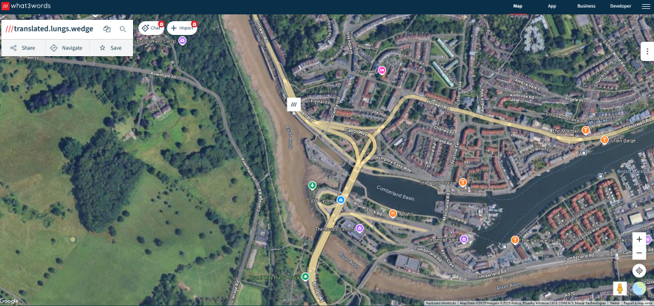
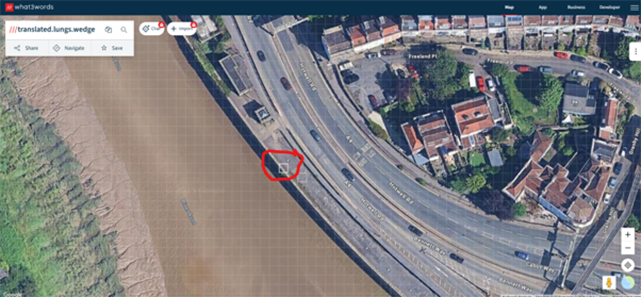
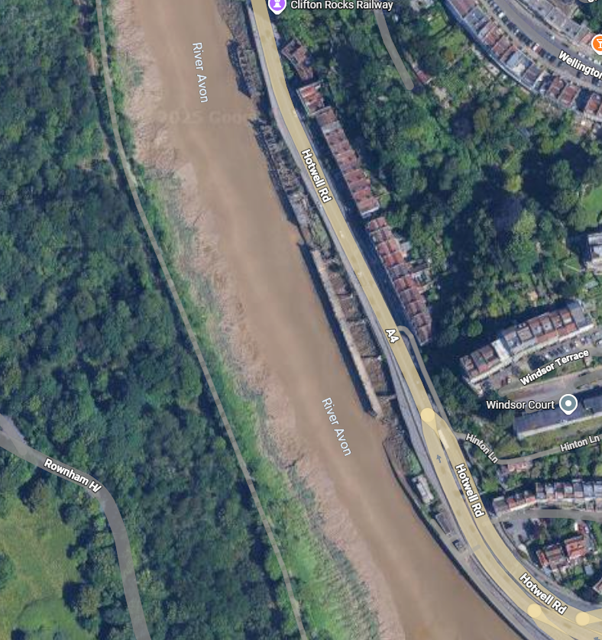
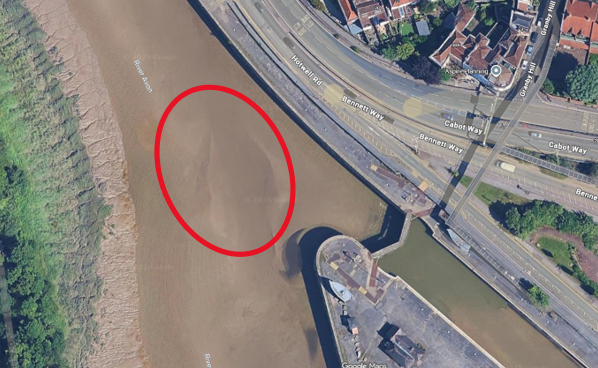
Though I haven’t personally viewed the CCTV footage, I am reliably informed by those that have, that it shows very unclear images of an unidentified person at or near the “What Three Words” location “translated.lungs.wedge” (see appendix 1 and 2). The person disappears from view at (0400) on 2nd March 2024. This is the only section of The River Avon that does not have a significant mudbank. There is no evidence that the person entered the water, nor can they be identified as Jack O’Sullivan. Due to the perspective of the video, the person may have simply tripped then been obscured from view by a wall that runs alongside the towpath in the given area. I am informed that the CCTV footage appears not to be continuous therefore the person could have simply recovered themselves, got up, then walked out of sight of the camera whilst it was not recording. This theory is backed up by a reconstruction video created by James Ward and my subsequent visit to the area. Due to these facts, I will refer to the person as Missing Person 3 (MP3) throughout this report.
I have approached this report from a neutral, unbiased stance, using my experience and knowledge in this field.
My report will consist of a purely hypothetical examination of what would have happened to MP3 had they entered the water at this time and location. As no evidence of a body has ever been found, I will attempt to answer the question of the likely location of where they could be found now, and the likelihood of this happening. It is somewhat unfortunate that I have not been provided with full details of Police searches for Jack O’Sullivan and have had to rely on media reports, photographs and locking data provided by Bristol Harbour Office. It is equally frustrating that I have not had the opportunity to view the CCTV Footage.
TIDAL INFORMATION FOR 1st AND 2nd MARCH 2024
Considering the specific location of the alleged entry position given by Avon and Somerset Police, the resultant potential position of MP3 on the riverbed is at the same level as the Cumberland Basin Outer Cill, I will therefore use this as the datum point for my calculations. It is to be noted that this is the same datum point used by Bristol Harbour Authority when calculating their tide times and heights.
Any “minus” number is “drying” i.e. above sea level at low tides at this point.
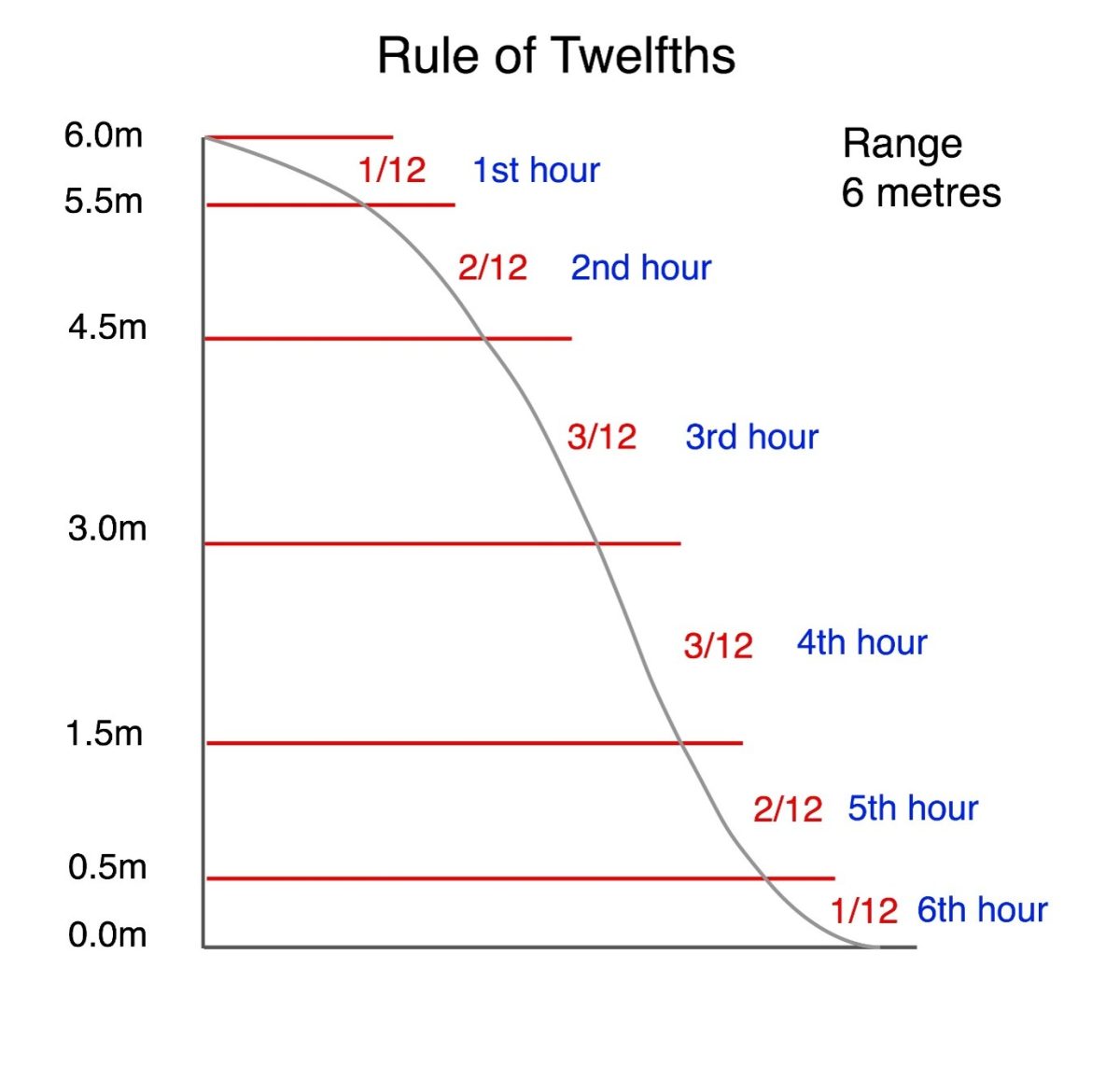
I have used “the rule of twelfths” for the purposes of the following calculation (see appendix 3) as it is easier for a lay person to understand. The alternative method, using the tidal curve chart for Sea Mills (https://easytide.admiralty.co.uk/?PortID=0523B), produces almost identical results.
The Rule of Twelfths is a rule of thumb method of estimating the height of the tide at any time between high and low water, given only the TIME and HEIGHT of HIGH and LOW water.
This is important when navigating a boat or a ship in shallow water and when launching and retrieving boats on slipways on a tidal shore. The rule assumes that the rate of flow of a tide increases smoothly to a maximum halfway between high and low tide before smoothly decreasing to zero again and that the interval between low and high tides is approximately six hours. The rule states that in the first hour after low tide the water level will rise by one twelfth of the range, in the second hour two twelfths, and so on according to the sequence 1:2:3:3:2:1.
The riverbed at this point has a thin layer of silt covering the harder gravel and stone substrate. A very small amount of outbound river water could have been present but I would calculate a maximum of 10cms when this area is considered to be “drying”.
| DAY | DATE | TIME | HEIGHT (m) | ||
| Low Water | FRI | 1st March | 16:36 | -0.8 | |
| High Water | FRI | 1st March | 22:30 | 8.5 | |
| Low Water | SAT | 2nd March | 04:52 | -0.8 | |
| High Water | SAT | 2nd March | 10:46 | 8.4 | |
The tidal range (difference between High Water and Low Water) on 2nd of March 2024 was 9.3m. One Twelfth of this figure is 0.775m.
Applying the rule of twelfths to this information produces the following data for the height of water at the point where MP3 is alleged to have fallen in:
| TIME | TWELFTHS | METERS +/- | HEIGHT AT CILL (M) | |
| HOUR -1 | 03:52 | 1 | 0.775 | -0.025 |
| LOW WATER | 04:52 | 0 | 0 | -0.8 |
| HOUR 1 | 05:51 | 1 | 0.775 | -0.025 |
| HOUR 2 | 06:50 | 2 | 1.55 | 1.525 |
| HOUR 3 | 07:49 | 3 | 2.325 | 3.85 |
| HOUR 4 | 08:48 | 3 | 2.325 | 6.175 |
| HOUR 5 | 09:47 | 2 | 1.55 | 7.725 |
| HOUR 6 (HW) | 10:46 | 1 | 0.775 | 8.5 |
The CCTV evidence suggests that MP3 fell from the quayside at (0400), this is approximately 1hour before Low Water. Using this data and the above figures I draw the following conclusions.
If MP3 fell from the quayside at the time given, then they would not have fallen into deep water but directly onto the riverbed as previously detailed. They would have remained unsubmerged and visible until at least 0620 when there would be a depth of water of 35cms at this point.
The question that must be asked is would a person survive a fall of 11m onto a relatively hard surface. I cannot give a specific answer as it is not within my area of expertise.
If still breathing and not laying face down, then MP3 could have begun to initially float, making them visible beyond my 0620 estimate.
I think is reasonable to presume that a fall from this height would have left MP3 incapacitated and incapable of surviving the incoming tide. The drowning process would begin.
Extract from Jack Report:
BEHAVIOUR OF A BODY ENTERING WATER
This is a very complicated but well researched subject.
Upon entering cold water, a person will experience hypothermic (cold water) shock. The sudden lowering of skin temperature produces involuntary responses which take effect almost immediately, reach their peak in the first 30 seconds and last for up to 2 to 3 minutes. The symptoms and effects of cold-water shock are:
At the time of Jack’s disappearance, the water temperature in all areas is estimated to have been less than 7°C. Air temperature was at near freezing point and sleet was falling. Jack was fully clothed.
Had Jack entered the water then survival time would have been very short, maximum four minutes. At the point of death, His body would have had negative buoyancy and sank quickly, very close to the point of entry. Here the body would have remained until natural biological processes took place which cause the body to refloat.
The time between sinking and refloating is variable according to several factors. The most important being water temperature. With a water temperature of less than 7°C and using extensive research, knowledge and experience, I would estimate the refloat time to be between 16 and 21 days. It is to be noted that the submerged body would be subject to any water currents though it would not move any distance due to the nature and composition of the riverbed. The body would refloat close to the point to entry.
THE RIVER AVON
For the purposes of this report, I will treat the River Avon as a tidal stretch of water between Avonmouth at the seaward end and Hanham Lock (Limit of tidal reach) to landward. The River Avon is famous for having the second highest tidal range in the world. Measured at Bristol Harbour Outer Lock Cill, the range of height can vary between 6.0m (Neap Tides) and up to 12m (Spring Tides). Spring Tides produce very strong currents due to the volume of water entering and leaving the river, conversely Neap Tides produce less current for the same reason. In general, Spring tides occur on a fortnightly cycle.
When considering currents, it is worth noting that the primary current refers to the general direction in which the river is flowing. It is the current found in an unobstructed main channel. The slowest moving water is next to the riverbed and each successive layer of water toward the surface flows faster than the layer below it. The fastest moving water is found just below the surface. This is because the air next to the surface creates friction which slows the surface water slightly. The fastest flowing currents are to be found on the outside of bends in the river and the slowest on the inside.
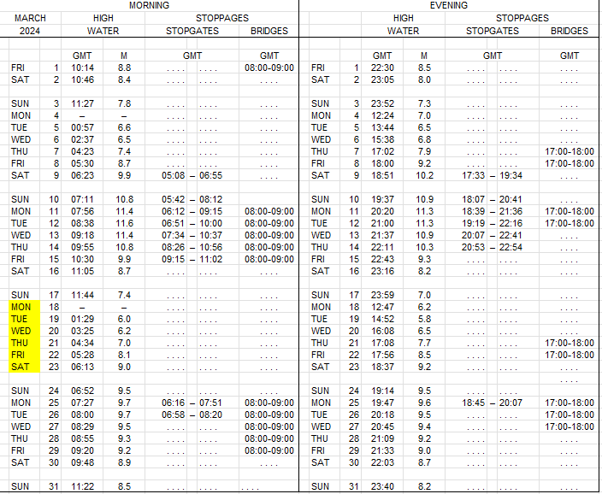
Jack was last reportedly seen on Saturday 2nd March at 0339. Jack’s phone was last active at 0644 on the same day. Tidal data for that day is Low Water 0431, High Water 1046 at a height of 8.4m (please see attached TTT March 2024, Appendix 4). This data proves that within the above timespan, there was very little water in the River Avon
Following the hypothesis that MP3 entered the River Avon at the “What Three Words” location translated.lungs.wedge (see appendix one and two) at (0400), I must consider what would have happened to the body.
MP3 would have fallen approximately 11m onto the riverbed which, at this point, has a thin layer of silt covering the harder gravel and stone substrate. A very small amount of outbound river water could have been present but I would calculate a maximum of 10cms.
It is unknown if MP3 could have survived a fall from this height. If still breathing and not presenting face down, then MP3 could have begun to initially float making them visible beyond my 0620 estimate.
I think is reasonable to presume that a fall from this height would leave MP3 incapacitated and incapable of surviving the incoming tide. The drowning process would begin.
MP3 would have remained unsubmerged and visible until at least 0620 when there would be a depth of 35cms at this point. It should be noted that the body of MP3 would have been exposed to view at each low water in the near vicinity of the entry point for at least two hours until floatation took place, estimated to be 16 to 21days i.e. 18th to 23rd March.
The body, already resting on the riverbed, would begin to experience negative buoyancy as the incoming tide began to cover it. It would move a very short distance from its point of entry during this and each following tide, staying close to the North wall. It would then have been subject to currents prevailing on the riverbed – the point at which the currents are weakest. The riverbed provides a great deal of resistance to movement due to its composition. Tides, regardless of Spring or Neap, come in and then go out by their very nature, reversing the direction of current each time they turn. It therefore follows that a body would move a relatively short distance, to and fro (please see graph below for a visual representation of tidal movement between 2nd March and 31st March 2024). In the period Sunday 10th March to Thursday 14th March, very high Spring tides were experienced in this area. At low water, the River Avon would have been at its lowest possible level; virtually a small stream of water. A sunken body would have been clearly visible.
From my calculations, the body would have refloated between 18th and 23rd March, within the vicinity of where it had entered the water. Referring to TTT March 24 (appendix 4), this was a period of neap tides with weaker currents followed by relatively low Spring tides. The body would have floated up and down the river until it either became entangled or stranded on a bank at a known catchment point. Spotting the body would have relatively easy as it would be floating through a highly populated area then back towards Avonmouth with a well-used footpath to the South and an equally well used road/footpath to the North. At this time Jack’s disappearance had been well publicised and the general public alerted. Even if out of sight, the presence of a body would have been obvious by its distinctive odour and the presence of gulls and other carrion birds.
Throughout my career with Bristol Harbour Master’s office, I undertook tidal watches. These were often at very unsociable hours and there was very little work to do. I spent my time observing the nature of tides in the River Avon. This enabled me to refine the Bristol Tide Prediction Timetable. During these years of observation, I noted that objects (tree trunks, logs, buoys, animal bodies etc) that entered the River Avon would float past my office with the incoming tide then float past again, towards Avonmouth, with the outgoing tide. This would happen at any state of tide, springs or neaps, or any combination thereof. The tides are so predictable that I could pinpoint the almost exact time that the object would pass my office window. Eventually the object would come to rest at certain catchment points within the River Avon. It is important to state that they were not “washed out to sea”. From the information I have been given, these “catchment points” were searched.
From data supplied by Bristol Harbour Authority, Police vessels were present in the Lock and River Avon between 22nd and 25th March, presumably searching for Jack’s body, around the time that it was predicted to refloat.
It is to be noted that the cooperation of Avon and Somerset Police regarding the nature and extent of their searches would have been useful but, as yet, has not been forthcoming. I have obtained the following information by researching news articles online. Though not always a totally reliable source of information, I have no reason to doubt their accuracy.
Wednesday, March 6th 2024:
“Police divers are still searching the harbour area for Jack, 22, who went missing after a night out in Bristol.
https://www.bristolpost.co.uk/news/bristol-news/live-concern-welfare-missing-man-9139522
Police were seen searching the Cumberland Basin area of the city this afternoon”.
https://www.bbc.co.uk/news/uk-england-bristol-68545249
“On Friday 8 March (2024), police divers were seen searching the River Avon”.
28th February 2025:
Assistant Chief Constable Joanne Hall said…
“Our investigation has been extensive, with resources utilised from more than 30 different teams and organisations, including support from colleagues within the fire service, HM Coastguard and the National Police Air Service (NPAS). This includes seeking independent advice, support and guidance from experts at the National Crime Agency, an experienced Police Search Advisor from a neighbouring force and an independent oceanographer.
“Our dive team has searched the river from Avonmouth through to Conham River Park. Officers, including those with our mounted team, dog unit and drone unit, have searched in water and on land, especially in the wider area where Jack was last seen, including the Hotwells, Ashton and North Somerset areas.
It must be stated that it is remarkable how the latest CCTV evidence has only come to light some 1 year, 8 months and 26 days since the day of Jack’s disappearance. Had this evidence been produced at or near to the time of the event, then a search for a body would have been a relatively easy process had proper expert opinion been sought and acted upon. This is, of course, assuming that the CCTV shows beyond doubt, a person entering the water. It is equally remarkable that the subsequent searches carried out at and around the time of Jack’s disappearance produced no results.
Considering the alleged entry point of MP3’s body, the tidal calculations and the behaviour of bodies in water, I find it remarkable that the body wasn’t sighted around low tide for the whole period of submersion. This is a busy area with heavy footfall. The body would have been relatively easy to spot from Tongue Head – a popular spot for walkers. Search teams, both Police and public, were very active during this period. Even if out of sight the presence of a body would have been obvious by its distinctive odour and the presence of gulls and other carrion birds.
The body would not have sunken into or been covered by silt during this time as that process is very gradual.
Given that the body was not sighted on or recovered from the riverbed, then it would have began to float. I had previously estimated the refloat time to be between 16 and 21 days which concurs with latter data provided by Avon and Somerset Police contained in MP2 Report dated 12th September 2025. It follows that the body would have floated up and down the river until it either became entangled or stranded on a bank at a known catchment point. The body would not have been “washed out to sea” as some have suggested. By the very nature and behaviour of tides in the River Avon, this is impossible. Spotting the body would have been relatively easy as it would be floating through a highly populated area then back towards Avonmouth with a well-used footpath to the South and an equally well used road/footpath to the North. At this time Jack’s disappearance had been well publicised and the general public alerted. Even if out of sight the presence of a body would have been obvious by its distinctive odour and the presence of gulls and other carrion birds. From the limited information that I have obtained, Police teams were searching in the correct places at the correct times. It is most likely that a body, if present, would have been found.
Once the body had come to rest then further decomposition would have taken place. This is not within my area of expertise, and a pathologist should be consulted. I have discussed this subject with a highly qualified Microbiologist. Their feeling was that given the timespan since the alleged incident, it would be near impossible to calculate the current state of a body due to the number of variable factors. Considering the length of time that has passed since the alleged incident it is most likely that no soft tissue would be present now. The skeleton would have parted. Natural fibre clothing tends to break down in the marine environment quickly whereas manmade fibre can last for a considerable length of time. There is a small possibility that some of the skeleton would be contained within clothing. If the body came to rest at a catchment point, then it would now have a significant covering of silt.
It is to be noted that the area indicated in Appendix 8 was plough-dredged in August 2025. Plough dredging is a method of underwater seabed levelling and material movement that uses a heavy, steel-framed “plough” or harrow towed by a tugboat. It works by scraping and collecting seabed material into a box as the plough is pulled ahead and then releasing the material when the tug reverses and lifts the plough out of the sediment. The ploughed material is dragged into the deepest part of the river and flushed away by the outgoing tide. This would have caused significant disturbance within the area indicated.
If it is believed that the person allegedly entering the water was Jack O’Sullivan, then I would suggest the following:
Jack was known to be carrying a number of inorganic items (see appendix 5). One or more of these could have fallen from his pockets or hands during a fall from the quayside. Items such as his keys, air tag and phone could still be present within the vicinity of where he is alleged to have fallen. It is to be noted that Jack’s iPhone 11 is water-resistant, not waterproof, and is rated IP68, which means it can withstand submersion in up to 2 meters of water for a maximum of 30 minutes. However, its water resistance can decrease over time due to normal wear and tear. A search for these items should take place, possibly with a metal detector.
Due to the likely decomposition of a body after this length of time, it is more likely that evidence of his clothing, if constructed with manmade fibres, could be found at the known catchment points though, again, I would question how his body was missed during the original search and any subsequent searches for missing persons. A further search would have to take into account any build-up of silt.
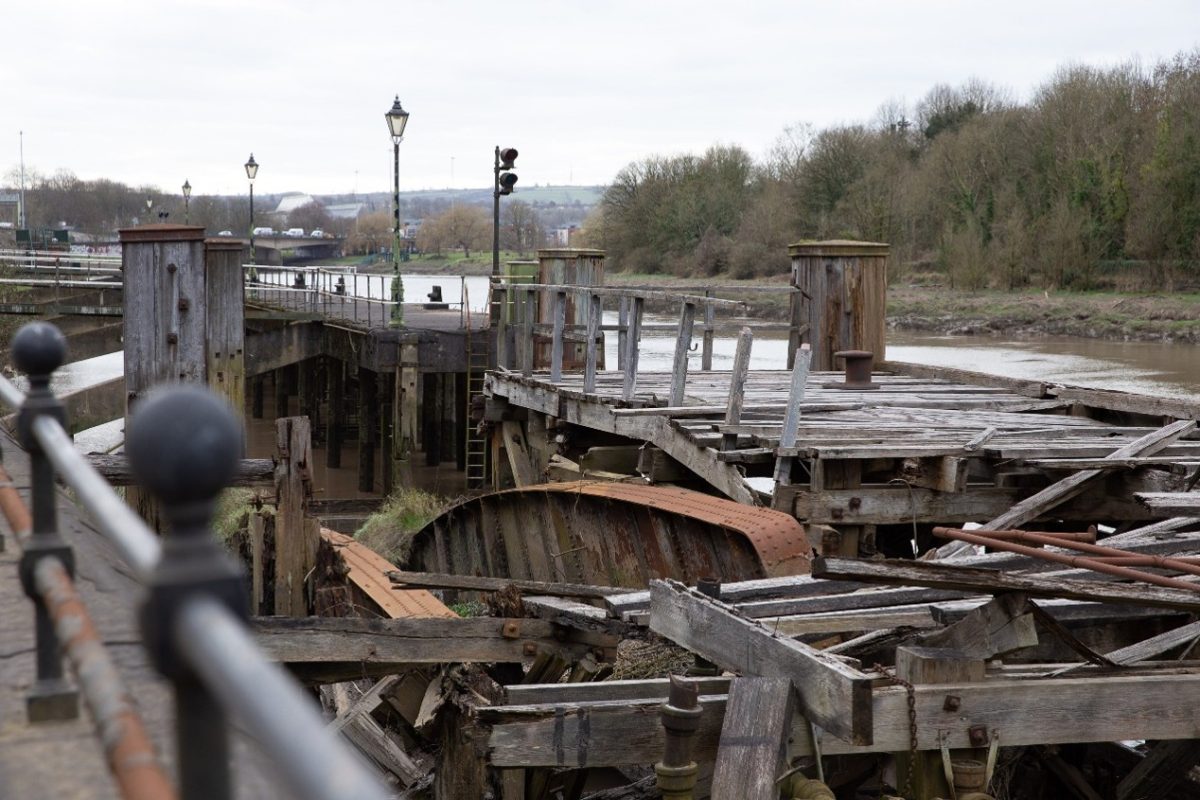
There is a small possibility that a body could have become snagged on the nearby Hotwell Pontoon (see appendix 6 and 7) and hidden from sight. Even though a search would be very dangerous due to the condition of the pontoon, a search could rule out this possibility.
In my opinion, it is very unlikely that identifiable human remains will be found. If no trace of Jack O’Sullivan is found in The River Avon, then it cannot be presumed beyond reasonable doubt that Jack lost his life in The River Avon.